
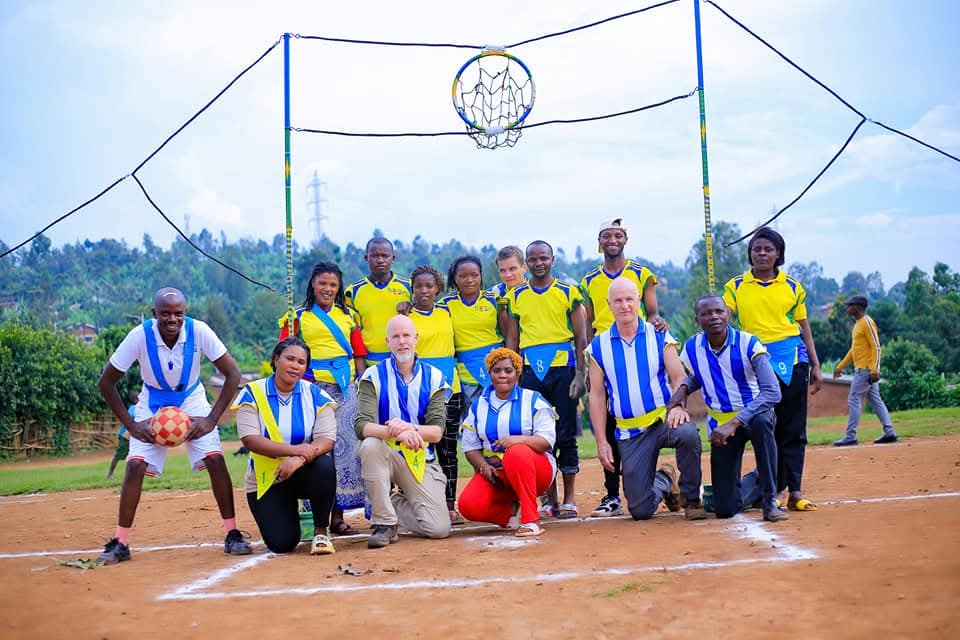
Boneza Ball
-
by
Cheza
Boneza Ball connects youth-led sporting innovation with education, inclusion and community development in Rwanda. Invented by Rwandan youth innovator Jonas Ngirinshuti, the sport is supported by Cheza and Rusizi Youth Forum as both a new game and a practical tool for youth development.
The initiative reflects an important part of Cheza’s vision: creating space for African sporting ideas to develop through local participation, organised delivery and relationships across borders. Cheza’s involvement recognises the sport’s Rwandan origin and the contribution of its inventor while supporting its development within schools and communities.
Origins and implementation
The programme operates in 24 schools in Rwanda, giving Boneza Ball a school-based foundation through which young people can encounter the game and participate in its development.
School delivery connects the sport with an educational setting where teamwork, coordination and social interaction can be practised alongside physical activity. The schools provide a route for participation; the programme’s wider purpose is to use that participation to support young people’s confidence, leadership and relationships.
Sport as a development tool
Boneza Ball is designed to promote teamwork, coordination and social interaction. Cheza supports these aims through a sport-for-development approach linking movement with youth leadership, innovation and peacebuilding.
The value of the initiative lies in connecting the experience of play with a wider social purpose. Participation provides a common activity through which young people can work together, interact and contribute to a sporting idea developed within their own region. Youth innovation is therefore part of the project’s identity, alongside the benefits of being physically active.
Disability inclusion: sitting Boneza Ball
The project includes adaptations for persons with disabilities, including sitting Boneza Ball. This extends the development approach to the design of the sport itself: participation needs to account for different physical abilities and access requirements.
The sitting format is a concrete expression of the programme’s inclusion focus. Its development creates an opportunity to consider how the same sporting idea can be experienced by a wider range of participants, rather than treating accessibility as a later addition.
Partnership and Cheza’s role
Cheza’s role is to support Boneza Ball as a sport and a development initiative in collaboration with Rusizi Youth Forum. The partnership combines Cheza’s experience in African sport development with the Rwandan initiative’s local foundation.
The project’s regional ambition includes cross-border collaboration between young people in Rwanda and the wider region. This provides a direction for future growth through knowledge exchange, school participation and relationships between sporting and youth organisations.
The next stage
The programme’s development priorities are continued school participation, youth leadership, accessible forms of play and regional collaboration. The existing 24-school footprint provides the foundation for that work. Further expansion should build on the game’s local ownership and the needs of participating schools.
Schools, youth organisations and partners interested in Boneza Ball can contact Cheza to discuss collaboration with the Rwanda programme.